What Are the Most Significant Environmental Agents That Contribute to Human Cancers?
Abstract
Cancer occurs with uncontrolled cell growth or aberrant cell division in Deoxyribonucleic acid damage. Carcinogens are the factors that cause DNA mutations and they are known to cause cancer in our torso by making changes in gene level. Genetic susceptibility is also important in cancer evolution along with factors such as poor living conditions. Additionally, all these ecology factors such every bit Ten-rays, gamma rays, the radiation emitted from radioactive materials, aniline type dyes, cigarette, free radicals, asbestos, silica grit, air pollution, food additives, various drugs, some of the chemicals used in perfumes, oncogenic viruses and bacteria are playing an important function in cancer formation and contribute the increment of incidence of cancer. The environmental factors that cause cancer are located in air, water, soil and the food that we need to live. Consequently, human get cancer from exposure to carcinogens from the environment where they live. The cancer is a hard disease to treat and reduces the life quality of people with cancer. Investigation of the effects of environmental factors in cancer and prevention of the cancer development by determining the factors that cause cancer are very important from this perspective.
Central words
Surround, carcinogens, cancer, Dna, mutation
Introduction
Cancer, which is the 2nd leading cause of death, is a grouping of disease involving abnormal cell growth with the potential to invade or spread to other parts of the body [ane,2]. According to GLOBOCAN, there were about 14.1 million new cancer cases, 8.2 1000000 cancer deaths and 32.six million people living with cancer inside 5 years of diagnosis in 2012 worldwide. On the other manus, it is estimated that 1,685,210 new cases of cancer volition be diagnosed in the United States and 595,690 people will die from the affliction in 2016. Thus, there is an urgent need for a new therapeutic strategy to reduce cancer-related deaths [3,4].
Cancer is a multifactorial disease. Near genetic factors and environmental factors such as viruses, bacteria, radiation and eating habits and chemicals increase the risk of developing cancer [3-8] (Figure 1). 10-15% of all cancers are thought to exist related to heredity, as for the rest, 85-90% of cancer have their roots in the environs and lifestyle. It is known that approximately 25-xxx% of tobacco, 30-35% of diet, 15-20% of infections and the remaining percentage of other factors like radiation, stress, physical activity, environmental pollutants, etc. cause cancer related mortality [9]. In terms of genetic factors, the mutations in multiples genes, including oncogenes, tumor suppressor genes and Dna repair genes can pb to cancer formation rather than a unmarried gene. These genes cause cancer through three main biologic pathways [cell cycle, apoptosis and differentiation], which are commonly, regulate tissue homeostasis and cell growth [ix]. For this purpose, the aim of this study was to hash out the interactions of genetic factors with various ecology factors, including diet, lifestyle, metabolic alterations, and various ecology exposures.
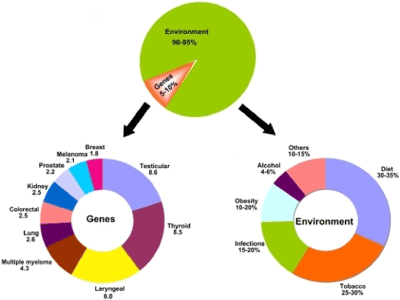
Figure i. The function of genes and environment in the development of cancer [9].
The relationship between cancer and genetics
Inherited genetic factors play an important role in cancer evolution. The mutation of critical genes, including tumor-suppressor genes, oncogenes and genes involved in DNA repair, leads to genetic instability and cancer development. Several genes related to inherited cancers have been identified on leukemia, certain childhood tumors, colon and peculiarly chest and ovarian cancer. [10]. For example, germline mutations in chest cancer factor one [BRCA1] correspond a predisposing genetic factor in 15-45% of hereditary chest cancers. Female mutation carriers have a lx-80% lifetime risk for developing breast cancer [11,12] and a 20-40% lifetime risk of developing ovarian cancer [xiii-15]. Furthermore, mutations in APC gene or mismatch DNA repair genes lead to two dissimilar types of inherited colon cancer familial adenomatous polyposis [FAP] and hereditary not-polyposis colorectal cancer [HNPCC], respectively [16].
The relationship between cancer and carcinogens
Ecology factors such every bit Ten-rays, gamma rays, radiation emitted from radioactive materials, aniline blazon dyes, cigarette, gratis radicals, asbestos, silica grit, air pollution, food additives, diverse drugs, some of the chemicals used in perfumes, oncogenic viruses and leaner play an of import role in the adventure of cancer. [ten].
Radiation
Radiation is classified into two fundamental categories equally not-ionizing and ionizing radiation. Ionizing radiation is identified every bit X-rays, which forms electrically charged particles or ions [17]. 10-rays and gamma rays are especially used for medical imaging [16,19]. Computed tomography [CT] is a radiological method that generates a three-dimensional paradigm for the diagnosis of various diseases [xx]. It has been described in several studies that diagnostic X-rays lead to cause mutations and up to 10% of invasive cancers are related to radiations exposure [21-26]. With regard to this business organisation, large cohorts of patients treated with radiotherapy for cervical cancer, breast cancer, Hodgkin lymphoma, testicular cancer, and childhood cancer have been followed for decades. Increased levels of screening in a radiation-exposure is known of the risk of cancer incidence. In this respect, the biological impact can change according to the dose equivalent of radiation [27-thirty].
Heavy metals
Exposure to various chemicals and heavy metals depending on exposed dose, genetics, people's immune resistance and overall wellness status, historic period, the level of nutrition has been associated with risk of different cancers, including breast cancer, pancreatic, lung cancer, and gallbladder cancer etc. [10]. When metals get into the body through air, food, water, or dermal exposure, they exert their enzymatic and genotoxic effects on unlike organs [31]. Some heavy metals such equally arsenic, cadmium, chromium, nickel, and zinc are known as developing cancer. They bind to vital cellular components, such as structural proteins, enzymes, and nucleic acids [32]. For instance, the effect of cadmium on the lung and prostate cancer has been determined [33]. The toxicological furnishings of zinc were determined in experimental animals [34]. Additionally, there may be a human relationship between exposure to certain metallic compounds and the risk of chest cancer [35]. However, there is urgently needed the experimental beast studies, and epidemiologic studies associated metals with cancer.
Cigarette
Chemicals in cigarette smoke cause Deoxyribonucleic acid harm and accept been increasing the risk of various cancers, particularly primary lung cancer [3-ten]. It is known that nearly ix out of ten lung cancers are caused by cigarette smoking. Cigarettes crusade about 1.5 million deaths from lung cancer per twelvemonth and it is estimated that a number volition rising to almost two meg per year past the 2020s or 2030s [6].
Foods and nutrition
Dietary factors have been associated with 30% of cancers in Western countries. In fact, making diet is a second factor after tobacco as a preventable crusade of cancer. The effects diet on cancer risk in developing countries has been considered around 20% [37]. On the other hand, some parts of additives have carcinogenic furnishings. For example, the dulce, cinnamyl anthranilate and thiourea similar synthetic additives, which cause liver cancer, have been identified in some experiments and thus, they are forbidden to use these substances in foods [38-40]. However, some substances, including nitrite salts, sodium nitrite [E250] or potassium nitrite [E249] have been used despite of increasing the risk of cancer. Meat products such equally sausage as antibacterial and color holder include these substances. This type of processed meat products increases the risk of bowel cancer past 21% [41]. Unfortunately, an excess of consumption of carbohydrate and salt, which are the two primary foods, causes obesity and an increment in insulin and so, higher level of these substances indirectly increase the run a risk of cancer [42]. Besides, aflatoxins are plant in the groundnut, pulses, oilseeds and grains and they increment the risk of hepatocellular carcinoma [11].
Gratis radicals and ROS
Free radicals and ROS have been associated with the increased risk of cancer [12]. Particularly gratis radicals cause cancer and atherosclerosis diseases. The complimentary radicals lead to cancer initiation and promotion by chromosomal defects and oncogene activation. On the other hand, ROS, such as super oxide anion, hydrogen peroxide, hydroxyl radical, and nitric oxide and their biological metabolites likewise play an important office in carcinogenesis. ROS induce Dna damage including double strand intermission, base of operations modification and Deoxyribonucleic acid protein cross-links [43].
Air pollution
Emissions from motor vehicles, industrial processes, power generation, the household combustion of solid fuel, and other sources pollute the ambient air across have global upshot in the globe. The chemical and physical features of ambient air pollution can vary co-ordinate to sources of pollution, climate, and meteorology. Nonetheless, the specific chemicals in the air pollution are known to exist carcinogenic to humans. In 1971, the US Clean Air Act was established and ozone, particulate matter, sulfur dioxide, nitrogen dioxide, carbon monoxide and lead were defined as air pollutants. Furthermore, 189 toxic and chancy air pollutants have been identified [44]. Exposure to ambience fine particles [PM2.5] was recently estimated to have contributed iii.2 meg premature deaths worldwide in 2010, due largely to cardiovascular disease, and 223.000 deaths from lung cancer [45, 46].
These air pollutants cause to acute disease such as vomiting, chronic diseases such every bit cancer, as well as immunologic, neurologic, reproductive, developmental and respiratory diseases. Exposure of these chemicals increases the risk of pleural and peritoneal tumors and lung cancer incidence [47-50].
Oncogenic viruses
Oncoviruses or tumor viruses are a full general term used for viruses. This term began to utilize in 1950-60 years to prove acute conversion. Nowadays, it means any virus containing Deoxyribonucleic acid or RNA genome and thus, it is synonymous with "tumor virus" or "cancer virus". However, the majority of viruses does non cause cancer in humans or animals [51]. Oncoviruses such as Hepatitis viruses [HBV, HCV], Man papilloma viruses [HPV], Kaposi sarcoma-associated herpesvirus [HHV-8], Homo T-Lymphotropic Virus [HTLV] and Epstein-Barr virus [EBV] have been associated with the risk of cancer [13]. It is estimated that viral infections contribute to fifteen-20% of all human cancers [52]. Thus, these cancers [e.g. Papillomavirus vaccines] tin exist prevented by vaccination and tin can be detected with a simple claret test and can exist treated with antiviral compounds.
Discussion
New areas of cancer inquiry are focusing on the potential for pollutants to interact with ane another and with genetic factors. The verbal cause or causes of cancer have not known exactly. However, certain genes that tend to cancer interact with some environmental factors such as viruses, exposure to radiation, various chemicals and pollutants are related to increasing the chance of cancer. Carcinogens have an result on damaging DNA, disrupting hormones, inflaming tissues, or switching genes on or off [53]. On the other mitt, there is substantial evidence that synergism between two different exposures can cause some cancers. Asbestos, for example, enhances the carcinogenicity of tobacco fume, so the charge per unit of lung cancer was especially high amongst people who smoked and were exposed to asbestos in their workplaces [53]. Consequently, the environs is often used with a broad telescopic in the medical literature and it is known that the ecology factors have been increased the risk of cancers [54]. Thus, more studies that are detailed are needed to determine the verbal effects of ecology factors on cancer development.
Conclusion
People tin avoid some cancer-causing exposures, such as tobacco smoke and the sunday rays. Even so, other environmental risk factors including air, water, nutrient pollutants cannot exist prevented due to consisting of normal life. It is known that environmental factors may cause or contribute to the development of cancer. All the same, studies that are more detailed are needed to determine the exact cause of a health outcome. Every bit a issue, when a large number of studies have been performed, association the bodily risk of cancer with the environmental take a chance factors tin can be clearer.
References
- Futreal PA, Kasprzyk A, Birney East, Mullikin JC, Wooster R, et al. (2001) Cancer and genomics. Nature 409: 850-852. [Crossref]
- Stratton MR, Campbell PJ, Futreal PA (2009) The cancer genome. Nature 458: 719-724. [Crossref]
- Williams GM (2001) Mechanisms of chemic carcinogenesis and application to human cancer take chances cess. Toxicology 166: iii-x. [Crossref]
- Williams 1000 M (1979) Review of in vitro test systems using DNA damage and repair for screening of chemical carcinogens. J Assoc Official Anal Chemists 62: 857-863.
- Williams G M (1985) Genotoxic and epigenetic carcinogens, In: F. Homburger (ed.), Condom Evaluation and Regulation of Chemicals ii. Touch of Regulations-Improvement of Methods, Basel: Karger: 251-256.
- Williams Grand M (1987) Deoxyribonucleic acid reactive and epigenetic carcinogens, In: J.C. Barrett, (ed.), Mechanisms of Ecology Carcinogenesis, Vol 1: Part of Genetic and Epigenetic Changes, Boca Raton, FL: CRC Printing, Inc:113-127.
- Williams GM (1987) Definition of a human cancer hazard. In: Nongenotoxic Mechanisms in Carcinogenesis. New York: Banbury Report 25, Cold Spring Harbor Laboratory: 367-380.
- Williams GM (1992) Dna reactive and epigenetic carcinogens. Exp Toxicol Pathol 44: 457-464. [Crossref]
- "Tag: Early diagnosis of cancer", https://sanjivharibhakti.wordpress.com/tag/early on-diagnosis-of-cancer/ (Accessed: Mar 11, 2017).
- Yokus B, Ülker DU (2012) Kanser Biyokimyasi. Dicle Üniv Vet Fak Derg 1: 7-eighteen.
- Aksoy U, Eltem R, Meyvaci KB, Altindisli A, Karabat S (2007) 5-year survey of ochratoxin A in processed sultanas from Turkey. Food Addit Contam 24: 292-296. [Crossref]
- Lobo V, Patil A, Phatak A, Chandra N (2010) Free radicals, antioxidants and functional foods: Touch on human wellness. Pharmacogn Rev 4: 118-126. [Crossref]
- Bougie O, Weberpals JI (2011) Clinical Considerations of BRCA1 - and BRCA2 -Mutation Carriers: A Review. Int J Surg Oncol 2011: 374012. [Crossref]
- King MC, Marks JH, Mandell JB (2003) Breast and ovarian cancer risks due to inherited mutations in BRCA1 and BRCA2. Science 302: 643-646. [Crossref]
- Antoniou A, Pharoah PD, Narod S, Risch HA, Eyfjord JE, et al. (2003) Boilerplate risks of breast and ovarian cancer associated with BRCA1 or BRCA2 mutations detected in case Series unselected for family history: a combined assay of 22 studies. Am J Hum Genet 72: 1117-1130. [Crossref]
- Vogelstein B, Kinzler KW (1993) The multistep nature of cancer. Trends Genet 9: 138-141. [Crossref]
- Dauda S (2011) Dicle Üniversitesi Tip Fakültesi Biyofizik Anabilim Dalinda "Iyonlastirmayan Elektromanyetik Alanlar Ve Ihsan Sagligi" Üzerine Yapilmis Arastirma Sonuçlarinin Degerlendirilmesi ÇEVRE ve Halk Sagligi Için Emanet 2011, Elektromanyetik Alanlar ve Etkileri Sempozyumu 7 - 8 Ekim, Istanbul: 233-237.
- Elektromanyetik Kirlilik ve Saglik. Kent ve Elektromanyetik Dalga Kirliligi Sempozyumu Bildiri Kitabi, Antalya, 2010; 15-22.
- 2007 Recommendations of the International Commission on Radiological Protection (Users Edition)" ICRP Publication 103. Ann ICRP 37: 1-332. [Crossref]
- Radiation protection in Medicine ICRP Publication 105. Ann ICRP 37: ane-63. [Crossref]
- Radiation protection, Ten-rays. http://world wide web.arpansa.gov.au/radiationprotection/ Basics/xrays.cfm (Accessed: May 29, 2016).
- Huang BS, Constabulary MWM, Khong PL (2009) Whole-Torso PET/CT Scanning: Interpretation of Radiation Dose and Cancer Risk. Radiology 251: 166-174. [Crossref]
- National Toxicology Plan, U.S. Department of Health and Human Services, Eleventh Edition of the Study on Carcinogens, January 31, 2005.
- Dedic S, Pranjic North (2009) Lung cancer gamble from exposure to diagnostic x- rays. Health Med 3: 307-313.
- Herfarth H, Palmer L (2009) Risk of Radiation and Choice of Imaging. Dig Dis 27: 278-284. [Crossref]
- Heyes GJ, Mill AJ, Charles MW (2009) Mammography-oncogenecity at low doses. J Radiol Protect 29: A123-A132. [Crossref]
- Gilbert ES (2009) Radiation-related risk of solid cancers appears to persist throughout life. Int J Radiation Biol 85: 467-482.
- Dawson P, Punwani S (2009) The thyroid dose burden in medical imaging: A re-test. Eur J Radiol 69: 74-79. [Crossref]
- Wakeford R (2008) Babyhood leukemia following medical diagnostic exposure to ionizing radiation in utero or later on nativity. Radiat Prot Dosimetry 132: 166-174. [Crossref]
- Myles P, Evans S, Lophatananon A, Dimitropoulou P, Easton D, et al. (2008) Diagnostic radiation procedures and risk of prostate cancer. Br J Cancer 98: 1852-1856. [Crossref]
- Gilbert ES (2009) Ionizing Radiation and Cancer Risks: What Have We Learned From Epidemiology? Int J Radiat Biol 85: 467-482. [Crossref]
- Chhabra D, Oda One thousand, Jagannath P, Utsunomiya H, Takekoshi S, et al. (2012) Chronic Heavy Metal Exposure and Gallbladder Cancer Chance in India, a Comparative Study with Japan. Asian Pac J Cancer Prev xiii: 187-190. [Crossref]
- Antwi SO, Eckert EC, Sabaque CV, Leof ER, Hawthorne KM, et al. (2015) Exposure to environmental chemicals and heavy metals, and risk of pancreatic cancer. Cancer Causes Control 26: 1583-1591. [Crossref]
- Verougstraete V, Lison D, Hotz P (2003) Cadmium, Lung and Prostate Cancer: A Systematic Review of Recent Epidemiological Data. J Toxicol Environ Health B Crit Rev six: 227-256. [Crossref]
- Vural H (1993) Agir metallic iyonlarinin gidalarda olusturdugu kirlilikler. Çevre Dergisi viii: 3-8.
- Florea M, Büsselberg D (2011) Metals and Breast Cancer: Risk Factors or Healing Agents? J Toxicol 8: 1-8. [Crossref]
- Proctor NR (2012) The history of the discovery of the cigarette lung cancer link: evidentiary traditions, corporate deprival, global cost. Tob Control 21: 87-91. [Crossref]
- Fundamental TJ, Schatzkin A, Willett WC, Allen NE, Spencer EA, et al. (2004) Nutrition, nutrition and the prevention of cancer. Public Health Nut vii: 187-200. [Crossref]
- Czene K, Lichtenstein P, Hemminki K (2002) Environmental and heritable causes of cancer among 9.six 1000000 individuals in the Swedish Family-Cancer Database. Int J Cancer 99: 260-266. [Crossref]
- Anand P, Kunnumakara AB, Sundaram C, Harikumar KB, Tharakan ST, et al. (2008) Cancer is a preventable affliction that requires major lifestyle changes. Pharm Res 25: 2097-2116. [Crossref]
- Boffetta P, Nyberg F (2003) Contribution of ecology factors to cancer run a risk. Br Med Balderdash 68: 71-94. [Crossref]
- Irigaray P, Newby JA, Clapp R, Hardell Fifty, Howard V, et al. (2007) Lifestyle-related factors and ecology agents causing cancer: an overview. Biomed Pharmacother 61: 640-658. [Crossref]
- Kushi LH, Doyle C, McCullough M, Rock CL, Bind-Wahnefried W, et al. (2006) American Cancer Order Guidelines on Nutrition and Physical Activeness for Cancer Prevention: Reducing the Risk of Cancer with Salubrious Nutrient Choices and Physical Activity. CA Cancer J Clin 56: 254-281. [Crossref]
- Hussain SP, Hofseth LJ, Harris CC (2003) Radical causes of cancer. Nat Rev Cancer 3: 276-285. [Crossref]
- Burrows Chiliad (2009) The Make clean Air Act: Citizen Suits, Attorneys' Fees, and the Separate Public Involvement Requirement. Envtl Aff 36.
- Air pollution and cancer. https://www.iarc.fr/en/publications/books/sp161/ Air Pollutionand Cancer16.pdf (accessed May eighteen, 2016).
- Dark-brown RC1, Hoskins JA, Miller Thou, Mossman BT (1990) Pathogenetic mechanisms of asbestos and other mineral fibres. Mol Aspects Med 11: 325-349. [Crossref]
- Peto J, Seidman H, Selikoff IJ (1982) Mesothelioma mortality in asbestos workers: Implications for models of carcinogenesis and risk cess. Br J Cancer 45: 124-132. [Crossref]
- Maghissi AA, Seiler MC (1989) Enhancement of exposure to radon progeny as a consequence of passive smoking. Environ Int xv: 261-264.
- Kunz E, Sevc J, Placek V, Horácek J (1979) Lung cancer in man in relation to different time distribution of radiations exposure. Health Phys 36: 699-706. [Crossref]
- Onkovirüs. https://tr.wikipedia.org/wiki/Onkovir%C3%BCs (accessed May 20, 2016).
- Margaret EM, Munger M (2007) Viruses associated with human being cancervol. Biochim Biophys Acta 1782: 127-150. [Crossref]
- How Many Cancers Are Caused by the Surroundings? http://www.scientificamerican.com/ article/how-many-cancers-are-caused-by-the-surroundings/ (accessed May 13, 2016).
- 50. Tomatis (1990) Cancer: Causes, occurrence and control. IARC Scientific Publications, 100. International Agency for Research on Cancer, Lyon.
Editorial Information
Editor-in-Chief
Article Type
Review Commodity
Publication history
Received date: Apr 17, 2018
Accustomed date: May 04, 2018
Published date: May 07, 2018
Copyright
©2018 Kaleli S. This is an open-access article distributed under the terms of the Artistic Commons Attribution License, which permits unrestricted use, distribution, and reproduction in whatever medium, provided the original author and source are credited.
Citation
Kaleli S, Deveci A, Eskiler GG (2018) Which surroundings makes cancer? Oncol Res Rev 1: doi: 10.15761/ORR.1000115
Corresponding writer
Suleyman Kaleli
Kinesthesia of Medicine, Department of Medical Biology, Sakarya Academy, 54187, Sakarya Turkey, Tel: +902642953117
This manuscript was presented as oral presentation in ISEM2016, tertiary International Symposium on Environment and Morality, 4-half-dozen November 2016, Alanya - Turkey
smiththoonions1940.blogspot.com
Source: https://www.oatext.com/which-environment-makes-cancer.php
0 Response to "What Are the Most Significant Environmental Agents That Contribute to Human Cancers?"
Post a Comment